

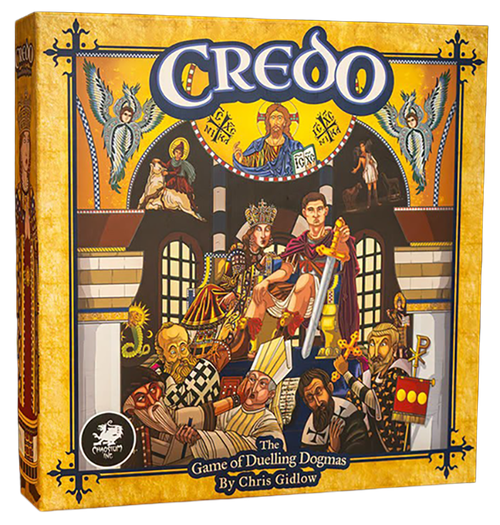
The Game of Dueling Dogmas
Anno Domini 325: Under the watchful eye of the newly converted Emperor, Bishops from throughout the Roman Empire gather together at the city of Nicaea… Freed from centuries of persecution by the victory of Constantine the Great at the Milvian Bridge, the community of the faith now faces its most important dilemma: just what exactly do we all believe?
Chaosium Unveiled: How to play Credo: The Game of Dueling Dogmas!
Watch the unveiling video to see the game for yourself.
What's Inside?
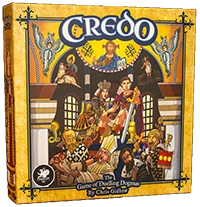
Credo is designed for 3-6 players, and has an estimated playtime of 2 hours.
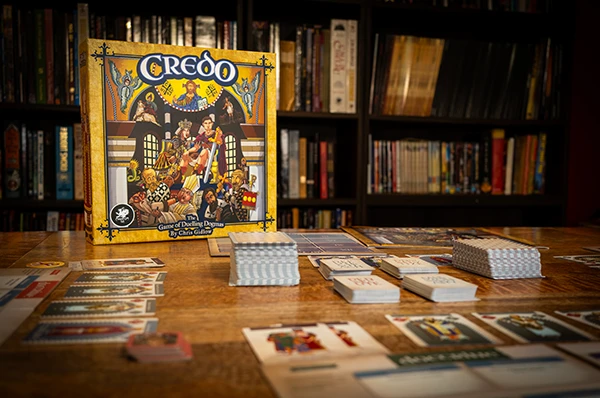
Playing Credo
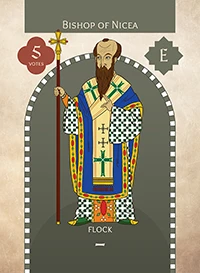
In Credo each player takes on the role of a different faction within the early Christian faith. The object of the game is to ensure the beliefs of your faction are accepted into the Creed—the universally agreed statement of faith of the whole Christian Church.
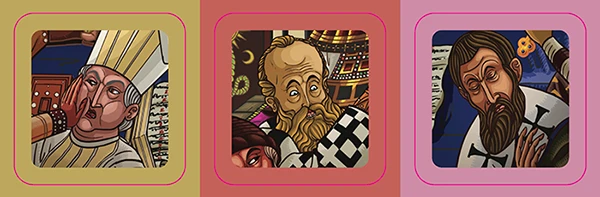
Wheel, Deal, and Manipulate Your Way To Victory
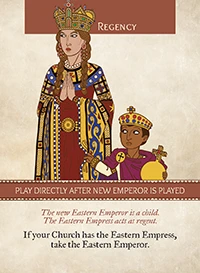
Players will need to convert and manipulate to gain followers to their flock, thwart off politicking rival bishops. Players may engage in raw politics, wheeling and dealing, and horse-trading! Manipulate international events, and succeed through judicious use of your secular backing.
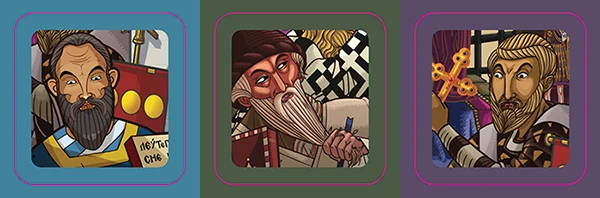
Connive, Succeed, and Thrive!
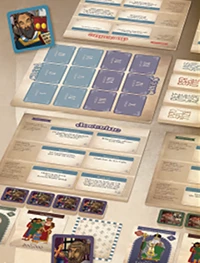
Play event cards, become the Emperor, and convene Councils. Form alliances or enter negotiations to win the vote. Send Church fathers to your rivals to convert them to your beliefs.
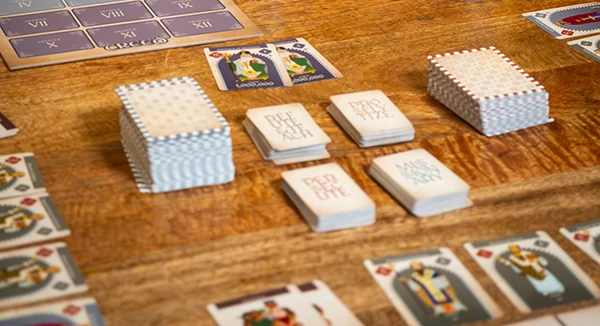
Re-Write History!
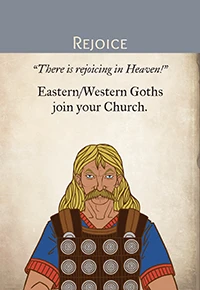
Your Bishops represent Churches from across the Empire, with wildly differing beliefs. Beliefs accepted by the Council will become the articles of orthodox doctrine; those rejected will be condemned as heresy! Somehow, you and your fellow players must sum up everything to form a Creed - one which may be very different to what we know today!
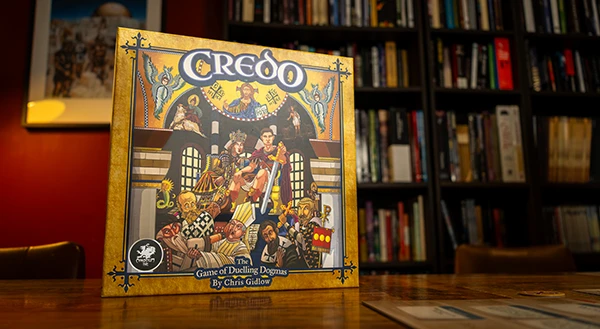
Product Configuration
Physical Product Settings
Is Physical Product: [Y]
Has Inventory: [Y]
United States: [Y]
United Kingdom: [Y]
Europe: [Y]
Australia: [Y]
Canada: [Y]
Has Lulu: [N]
Lulu Product Name: [Nameless Horrors - POD]
Lulu Product Link: [/nameless-horrors-pod/]
Is PDF Available: [N]
PDF Product Name: [Nameless Horrors - PDF]
PDF Product Link: [/nameless-horrors-pdf/]
PDF Settings
Has Physical Product: [Y]
Is Physical Available: [N]
Physical Product Name: [Y]
Physical Product Link: [Y]
Product Footer
Footer Name:
- Publisher:
- Chaosium
- Year Released:
- 2026
- Format:
- Full Color Box
- Manufacturer’s Number:
- LongPack.6511400
- Game Designer and Historical Background:
- Chris Gidlow
- Design and Development:
- Michael O'Brien, Jeff Richard, Susan O'Brien
- Additional Development:
- Nick Brooke, Neil Robinson
- Graphic Design:
- Peter Gifford
- Additional Graphic Design:
- Simeon Cogswell, Kat Clay
- Technical Editing:
- Martin Helsdon
- Cover Artwork:
- Kalin Kadiev
- Interior Art:
- Kain Kadiev
- Cartography:
- Todd Gardiner
-
A new era of theological clarity dawns. Or at least theological ludology.
We have been playing the earlier edition since 1993, and eagerly awaiting the new edition since prophecies of its coming more than 30 years ago, now our faith has been rewarded at last. Credo, the card game of duelling sects of early Christianity competing to get their beliefs accepted as the Orthodox creed. New edition is designed for faster, smoother, play, but with a few more tactical options, and also has very pretty art. Most importantly it retains all the references to historical (and dubiously historical) nonsense.
-
Fun idea but frustrating rules
Credo is a fun game with an interesting theme, but its rules and mechanics make it frustratingly difficult to enjoy. First, the rulebook is surprisingly incomplete. For example, it never properly explains what the Missionary cards are or how they are supposed to work. They are mentioned only once, in the description of the special event "Gothic Invasion." It makes little sense to include an entire additional deck of cards if they can only be used during a single, relatively rare event. In our games, these cards never came into play. Having a whole deck that is barely mentioned in the rulebook and apparently serves no purpose during most games is simply bizarre. The more serious problem is that several rules actively undermine what should be the game's central mechanic: negotiation. For example, you can only vote for your own Articles of Faith and Firm Beliefs. What is the point of negotiating if the rulebook has already determined where your votes must go? It is fun to exchange made-up theological ideas, but at the end of the council, it often does not make any difference. The number of votes you receive depends on the number of bishops you control, which often feels almost arbitrary. There seems to be very little you can do to influence this number strategically. Combined with the restrictions on voting, this makes the Council phase feel much less engaging than it should be. Another frustrating limitation is that you can play only one event card during each Council phase. Many of the event cards also feel rather situational. As a result, we ended up accumulating large hands of cards that we rarely had an opportunity or reason to play. Since you draw a card at the beginning of each turn and another at the end of each Council, this problem gets worse as the game progresses. I could explain other aspects of the rules that felt poorly tested, but these should be enough. Admittedly, we only played short games with three players, and perhaps Credo works significantly better for a longer game with a larger group. However, if that is the case, the rulebook should provide modified rules for different number of players. There are no adjustements of this kind and one has to fix it with house rules. Overall, the game has a cool premise but has poorly explained rules and unnecessarily restrictive mechanics. Cool art and theme can not replace the most important aspect of any board game—its mechanics. I really wanted to like it, but was sadly disappointed.
-
Glorious return of a classic!
Credo was always a lot of fun, and in its new 2026 form is now exceptionally beautiful too with art by Kalin Kadiev